Fernweh
Fernweh is a German word for which there is no direct translation. It’s a word that is the opposite of “homesick,” and essentially is the feeling of yearning for far away places. It’s not quite the same thing as wanderlust, but more of a deep emotional ache, an itch that can’t quite be scratched.
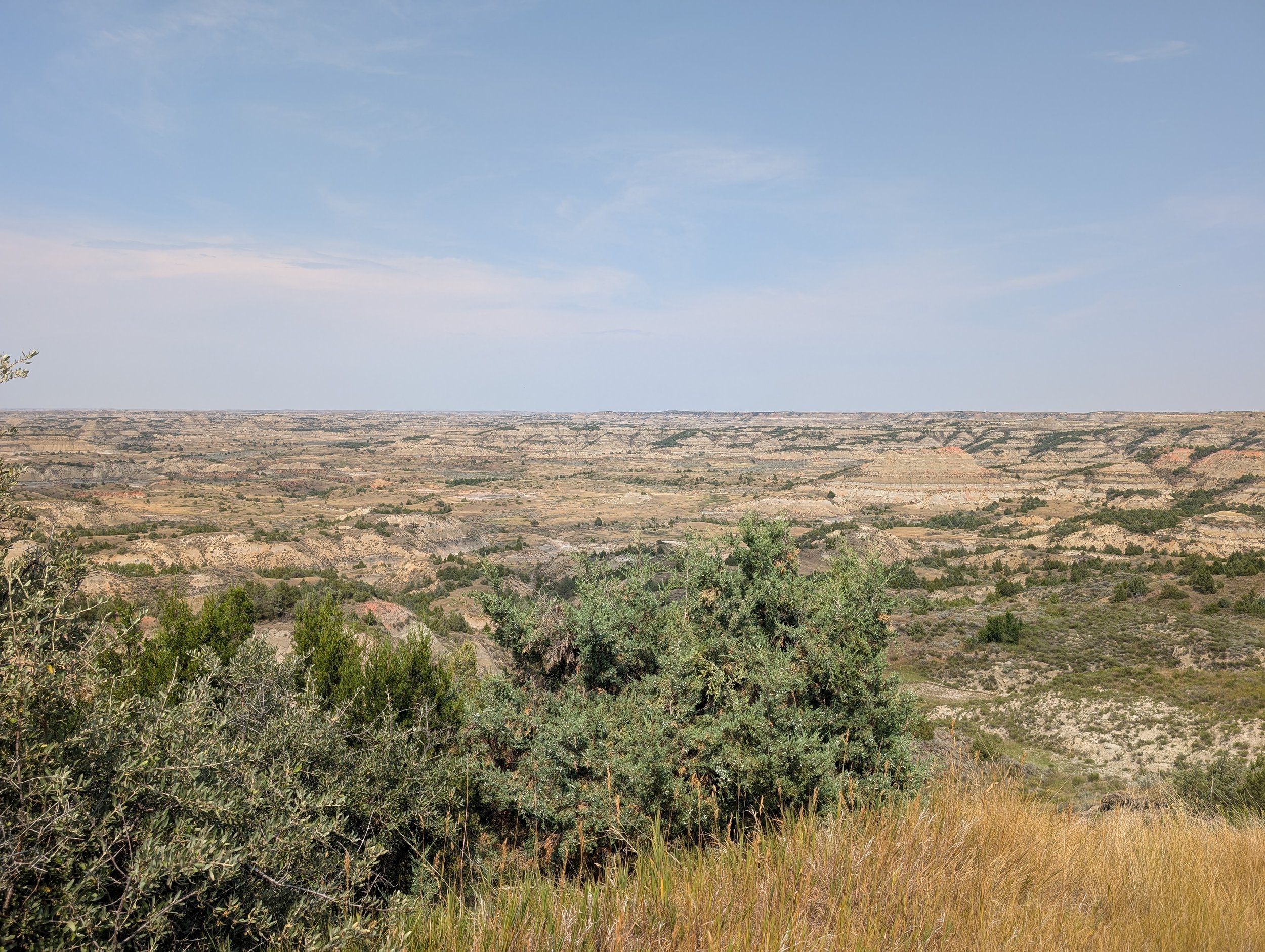
The Painted Canyon of Theodore Roosevelt National Park in North Dakota
Not even two months ago, I embarked on a 23 day road trip. I left home with my husband, and we wandered up through Buffalo, New York, across southern Ontario, then up into the Upper Peninsula of Michigan before heading west across Minnesota and deep into North Dakota. The new Theodore Roosevelt Presidential Library had opened on July 4th, and my husband especially wanted to see it. I guess in a way, the “theme” of this year’s road trip was Teddy.
Our stop in Buffalo was to visit the Theodore Roosevelt Inaugural National Historic Site, which interprets the time Roosevelt spent in Buffalo during the 1901 Pan-American Exposition, where William McKinley was shot and killed. The historic home itself belonged to Ansley Wilcox, a friend of Roosevelt’s. We learned a bit more about Roosevelt’s background, and we got to “talk” with Holo-Ted. Holo-Ted is an AI powered hologram of Roosevelt, and we asked him about his favorite sport. It turns out that Roosevelt’s favorite sport was boxing, but we did ask him about ice hockey, too, since the Stanley Cup existed at that time.
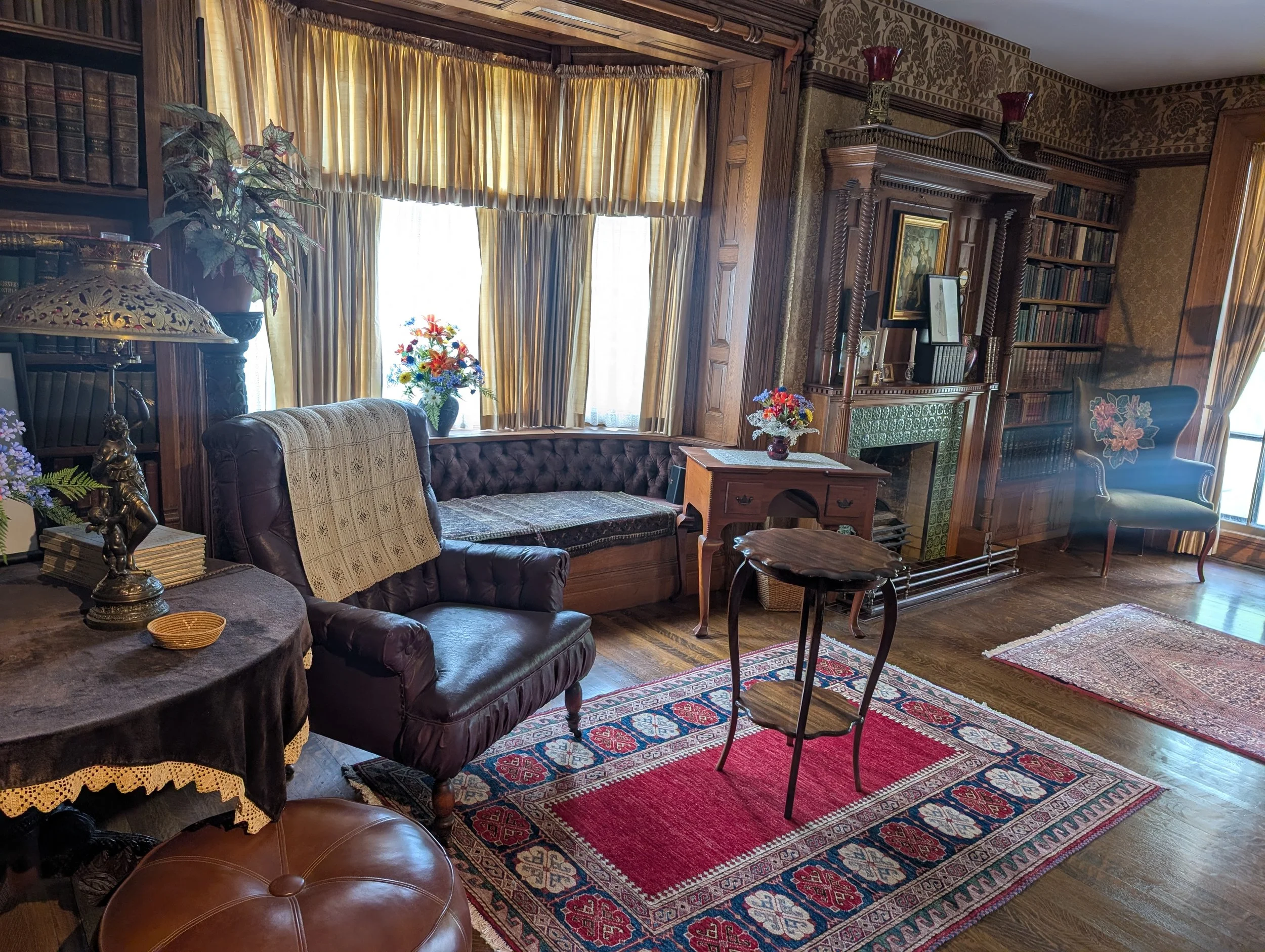
The library at Wilcox’s home served as the site of the inauguration. Press were asked to wait outside, as the small area could not hold the 50+ people who were there to witness the event.
Theodore Roosevelt wasn’t just a wealthy elite from New York. After traveling to the Dakotas to hunt bison, he found an area that restored him spiritually, one that he retreated to after the deaths of his wife and mother in 1884.
The Presidential Library starts with Roosevelt’s childhood and takes you through his life. Those 2-3 years spent in North Dakota changed him, allowing him to see things from a perspective that his peers back home in New York didn’t really understand. The time spent in the North Dakota badlands — now protected as Theodore Roosevelt National Park — helped him to understand the importance of conservation of public lands, leading to his work in establishing the American Bison Society and helping bring the animal back from the brink of extinction. Roosevelt’s signing of the Antiquities Act of 1906 was also instrumental to his work in protecting places that he could designate as National Monuments without Congressional approval, which was often subject to the whims of mining and logging executives.
Most people recognize Roosevelt’s protection of Devil’s Tower as a National Monument as the first such site. Muir Woods and the Grand Canyon were also designated as National Monuments at that time, and he followed up with pressure on Congress to protect five areas as National Parks: Crater Lake, Wind Cave, Sullys Hill, Mesa Verde and Platt. The bison at Wind Cave are part of Roosevelt’s legacy of preserving the country’s national mammal.
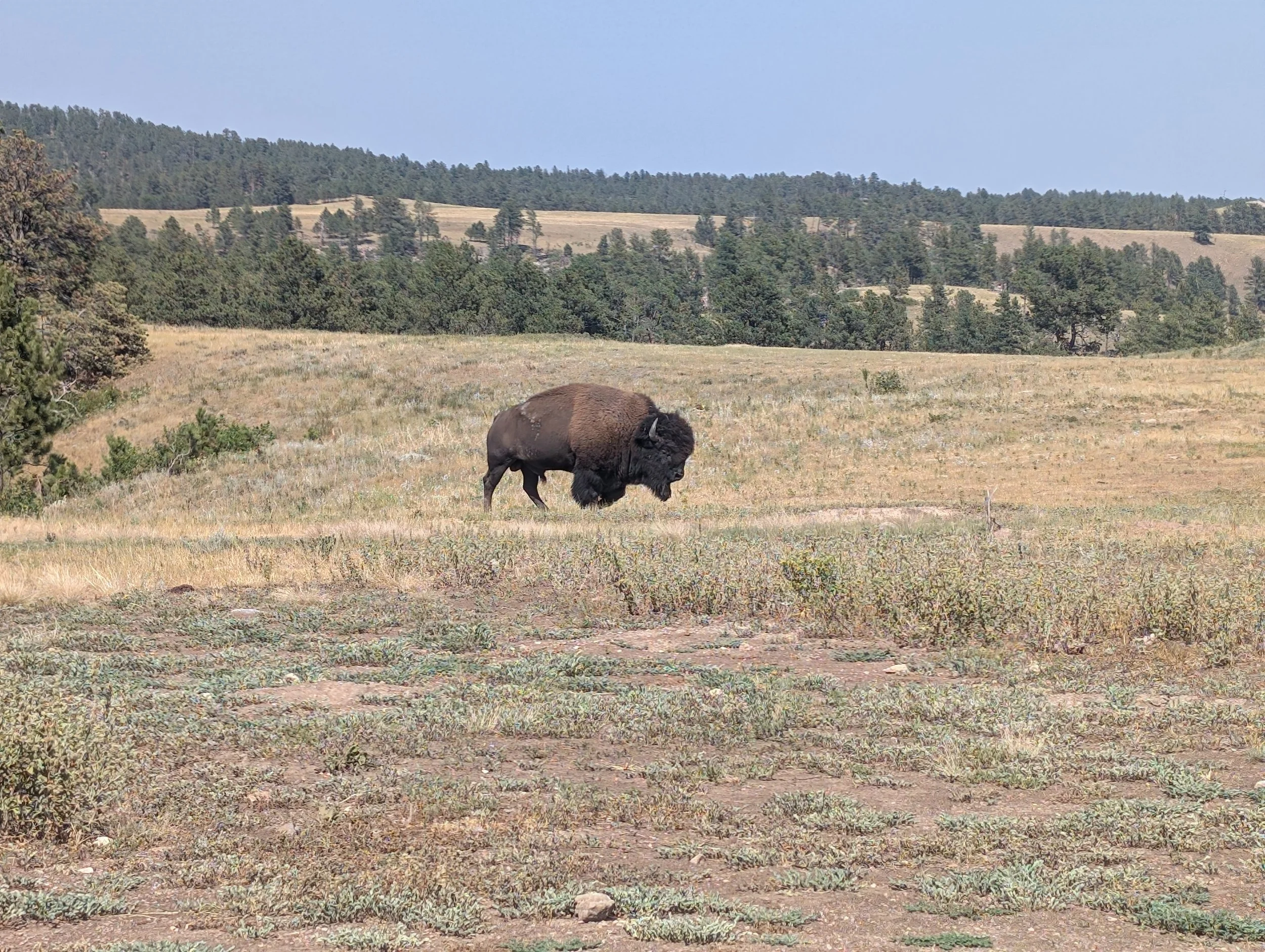
A lone bison bull at Wind Cave National Park
So how does all that relate back to fernweh?
What Roosevelt knew intuitively is that being in nature is soothing and necessary. A 2023 paper by Sundermann, et al in the American Journal of Lifestyle Medicine even calls nature the “7th (Unofficial) Pillar of Lifestyle Medicine,” saying that “Time spent in nature has been shown to help lower blood pressure…, enhance immune system function, reduce anxiety and increase self-esteem.”
When I desperately long to be outside, to go hiking, fishing, camping or just to sit outside, it’s literally for my own well-being. Fernweh is our subconscious knowing what we really need to feel “right” inside. Forest bathing, touching grass, grounding are all practices that are proven to help mental health, and these days, it seems that those connections are needed more than ever.
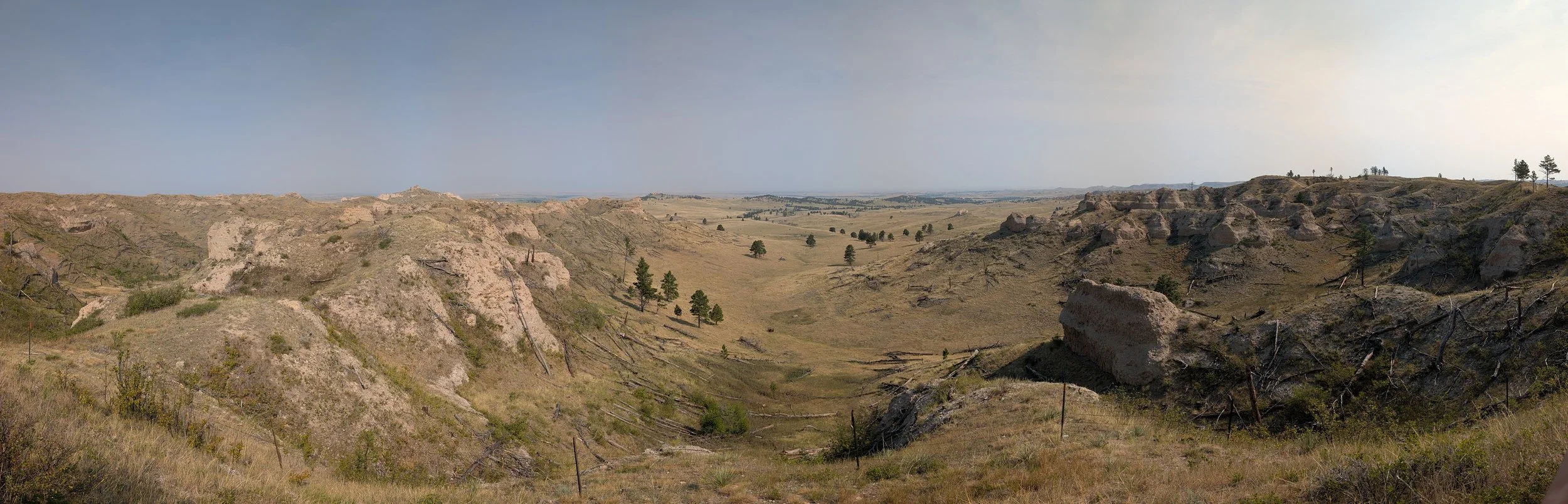
View from an overlook at Chadron State Park in Chadron, Nebraska.
